Seamless Connectivity: How to Buy Canada Travel SIM Card
buy canada travel sim card

Seamless Connectivity: How to Buy Canada Travel SIM Card

Stay connected effortlessly across Canada with the best SIM card options for tourists and visitors.

Find Your Perfect SIM Now

Key Takeaways

  • ✓ Prepaid physical SIMs and eSIMs are readily available for travelers in Canada.
  • ✓ Major Canadian carriers (Rogers, Bell, Telus) offer tourist-friendly plans.
  • ✓ eSIMs provide instant activation and avoid physical SIM swaps.
  • ✓ Coverage varies, especially in remote areas; check maps before purchase.
  • ✓ Consider data needs, call requirements, and plan validity when choosing.

How It Works

1
Assess Your Needs

Determine how much data, calls, and texts you'll require for your trip duration. Consider if your phone supports eSIM technology.

2
Research Options

Compare different providers, plan types (prepaid, eSIM), and pricing. Look for reviews specific to travel SIMs in Canada.

3
Purchase & Activate

Buy your chosen SIM online, at the airport, or a retail store. Follow the activation instructions, which often involve a simple online process.

4
Enjoy Connectivity

Insert the physical SIM or activate the eSIM profile on your device. You're now connected and ready to explore Canada without worrying about high roaming charges.

Why You Need a Canada Travel SIM Card for Your Trip

Beautiful view of Toronto skyline featuring the iconic CN Tower under a clear blue sky. Photo: alex ohan / Pexels
Embarking on a journey to Canada, whether for its breathtaking landscapes, vibrant cities, or unique cultural experiences, promises an unforgettable adventure. However, to truly maximize your experience and navigate this vast country efficiently, staying connected is paramount. This is where the decision to buy a Canada travel SIM card becomes not just a convenience, but a necessity. Relying on international roaming from your home provider can quickly lead to exorbitant costs, transforming a simple phone call or data usage into an unexpected financial burden. These charges, often hidden in the fine print, can deplete your travel budget faster than you can say 'Maple Syrup.' A dedicated Canadian SIM card or eSIM bypasses these prohibitive fees entirely, offering local rates for data, calls, and texts, making communication affordable and predictable. Beyond cost savings, a local SIM card provides unparalleled convenience and peace of mind. Imagine trying to navigate unfamiliar streets without access to GPS, or needing to book a last-minute reservation without being able to make a call. From using popular ride-sharing apps to staying in touch with loved ones, accessing emergency services, or simply sharing your incredible travel moments on social media, constant connectivity is crucial. A local SIM ensures you're always just a tap away from essential information and services. Furthermore, many Canadian services and businesses operate primarily using local phone numbers, making it easier to confirm bookings, contact hotels, or even order food delivery. Having a local number can streamline many daily interactions and prevent potential frustrations. For those who prioritize safety, a working phone is a lifeline. In an emergency, being able to dial 911 immediately or contact a local consulate can be critical. Even for less urgent situations, such as getting lost or needing roadside assistance, a reliable connection is invaluable. Moreover, using public Wi-Fi networks for sensitive transactions can pose security risks. A personal mobile data connection through a local SIM offers a more secure way to manage your banking, emails, and other private information while on the go. This level of security and reliability is something that relying solely on sporadic hotel or cafe Wi-Fi simply cannot match. Therefore, before you even pack your bags, understanding how and where to buy a Canada travel SIM card should be high on your travel planning checklist. It's an investment that pays dividends in convenience, savings, and peace of mind throughout your Canadian adventure.

Understanding Your Options: Physical SIM vs. eSIM for Canada
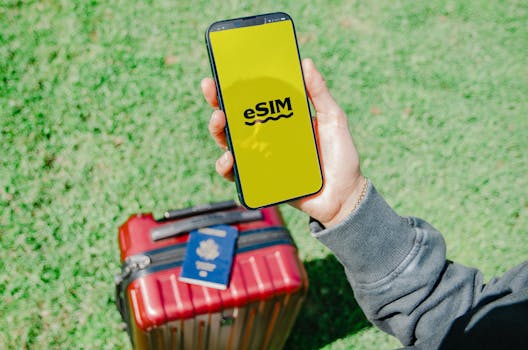
Traveler in Los Angeles holding a smartphone with eSIM near a red suitcase on grass. Photo: Jacob / Pexels
When you decide to buy a Canada travel SIM card, you're primarily faced with two main choices: a traditional physical SIM card or the newer eSIM technology. Each has its own set of advantages and considerations, and the best option for you will depend on your specific device, travel style, and preferences. Understanding these differences is key to making an informed decision that enhances your travel experience. A physical SIM card is the classic, tangible chip that you insert into your phone's SIM tray. These are widely available and compatible with almost all unlocked smartphones. The process usually involves purchasing the SIM, removing your home country's SIM, inserting the new Canadian SIM, and then activating it, often through an online portal or by making a quick call. The main advantage of a physical SIM is its universality; you won't need a specific phone model to use it. However, it does mean physically swapping cards, which can be a minor inconvenience, and there's a small risk of losing your home SIM card during the exchange. You'll typically find physical SIM cards at airports, convenience stores, electronic retailers, and official carrier stores across Canada. They are a reliable and straightforward option for many travelers, particularly those with older phone models or those who prefer a tangible product. On the other hand, an eSIM (embedded SIM) is a digital SIM profile that's pre-installed or downloaded onto compatible smartphones and devices. Instead of a physical chip, the SIM information is stored electronically. The primary benefit of an eSIM is unparalleled convenience: no physical swapping is required. You can purchase an eSIM online, receive a QR code via email, and activate it instantly by scanning the code on your phone. This means you can often set up your Canadian connectivity before you even leave home, landing in Canada with an active data plan. eSIMs also allow you to keep your home SIM active for incoming calls or texts while using the eSIM for data, offering dual connectivity without the need for two physical SIM slots. The main limitation is device compatibility; only newer smartphone models (e.g., iPhone XS and later, recent Samsung Galaxy and Google Pixel models) support eSIM functionality. If your phone is eSIM-compatible, this option offers a seamless, hassle-free experience, perfect for tech-savvy travelers looking for instant connectivity. Providers like Holafly, Airalo, and even some Canadian carriers offer eSIM plans specifically tailored for tourists. Choosing between a physical SIM and an eSIM ultimately boils down to your phone's capabilities and your preference for convenience versus universal compatibility.

Top Canadian Carriers and Where to Buy Canada Travel SIM Card

Classic London street scene featuring a red telephone booth, perfect for travel photography. Photo: Zekai Zhu / Pexels
When it comes to purchasing a Canada travel SIM card, understanding the major players in the Canadian telecommunications market is crucial. Canada is dominated by three primary carriers, often referred to as the 'Big Three': Rogers, Bell, and Telus. These networks offer the most extensive coverage across the country, including major cities, highways, and many rural areas, though coverage can still be spotty in very remote regions. Each of these carriers, along with their flanker brands, provides various prepaid options that are ideal for tourists. **Rogers:** One of Canada's largest providers, Rogers offers a wide range of prepaid plans under its own brand and through its sub-brands like Fido and Chatr. Rogers' network boasts strong coverage, particularly in urban centers and along major travel corridors. You can easily buy a Rogers SIM card at their corporate stores, authorized dealers, and even at many convenience stores and electronics retailers like Best Buy. Fido, a popular sub-brand, often provides more competitive data-centric plans aimed at a younger demographic or those looking for good value. Chatr, another Rogers brand, focuses on affordable, no-frills plans with unlimited talk and text, and smaller data packages, perfect for those who primarily need basic connectivity. **Bell:** As another one of Canada's leading telecommunications companies, Bell offers robust network coverage, often on par with Rogers, especially in eastern Canada. Their prepaid services are available through Bell Mobility stores, authorized retailers, and numerous third-party outlets. Bell also operates Virgin Plus (formerly Virgin Mobile), which is a popular choice for prepaid users, offering a good balance of data, talk, and text plans with competitive pricing. Virgin Plus often includes perks like member benefits and discounts. For those seeking basic, budget-friendly options, Lucky Mobile, a Bell sub-brand, provides low-cost plans with unlimited talk and text and various data add-ons. **Telus:** Completing the 'Big Three,' Telus is renowned for its excellent network performance, particularly in Western Canada and often boasts strong rural coverage. Telus prepaid SIMs can be purchased at Telus stores, authorized dealers, and electronics stores nationwide. Koodo Mobile, Telus's highly regarded sub-brand, is a fantastic option for travelers, offering flexible prepaid plans with competitive data allowances and often including international texting. Public Mobile, another Telus brand, stands out for its unique community-based model, offering loyalty rewards and discounts for auto-pay and referring friends, making it a very cost-effective option for longer stays. When considering where to buy a Canada travel SIM card, these major carrier stores and their sub-brand outlets are your safest bet for reliable service and direct support. Remember to check their websites before your trip for the latest prepaid plan offerings and store locations. Planning your Canadian itinerary around these connectivity points can make your journey smoother.

Tips for Choosing the Best Travel SIM Card and Avoiding Pitfalls

Two diverse women enjoying travel with backpacks, sharing a happy moment on a street. Photo: Ketut Subiyanto / Pexels
Navigating the world of travel SIM cards can be daunting, but with a few key tips, you can ensure you pick the best option for your Canadian adventure and avoid common pitfalls. The right choice will save you money, time, and frustration, allowing you to focus on enjoying your trip. First, **assess your data needs accurately**. Are you a heavy streamer and social media user, or do you primarily need data for navigation and occasional communication? Canadian data can be pricier than in some other countries, so buying too much can be wasteful, while too little will leave you scrambling for Wi-Fi. Many travelers find 5GB to 15GB sufficient for a 2-3 week trip, but this varies wildly. Consider plans that offer unlimited throttled data after a certain allowance if you're unsure. Next, **check your phone's compatibility and unlock status**. Ensure your smartphone is unlocked from your home carrier, otherwise, it won't accept a Canadian SIM card. Most newer phones purchased outright are unlocked, but contract phones may still be locked. Additionally, if you're considering an eSIM, verify that your device supports this technology. A quick search for your phone model and 'eSIM compatibility' will usually provide the answer. **Compare coverage maps, especially for rural travel**. While Rogers, Bell, and Telus offer excellent coverage in populated areas, Canada is vast. If your itinerary includes national parks, remote hiking trails, or less-traveled routes, check the coverage maps provided by each carrier on their websites. Some areas, particularly in the northern territories or deep wilderness, may have no cell service regardless of the provider. **Understand plan validity and top-up options**. Most prepaid travel SIM cards have a validity period (e.g., 15, 30, or 60 days). Ensure your chosen plan covers the entire duration of your stay. Also, familiarize yourself with how to top up your balance or data if needed. Many providers offer online top-ups via credit card, which is convenient, but knowing the process beforehand can prevent a data drought. **Read the fine print for hidden fees or restrictions**. Some plans might advertise unlimited data but then significantly throttle speeds after a small allowance. Others might have limitations on international calls or specific types of data usage. Always clarify what is truly included in the package. Finally, **consider purchasing your SIM in advance or at the airport**. Buying an eSIM online before you leave means you're connected the moment you land. If you prefer a physical SIM, major Canadian airports often have kiosks or stores where you can purchase and activate one immediately, saving you the hassle of finding a store in a new city. By following these tips, you can confidently buy a Canada travel SIM card that perfectly fits your needs and budget.

Comparison

FeatureeSIM (Online Providers)Physical SIM (Big 3 Carriers)Physical SIM (Flanker Brands)
Ease of Purchase/ActivationVery Easy (Online, Instant)Moderate (In-store, Activation)Moderate (In-store, Activation)
Cost per GB (approx.)Moderate to HighModerate to HighLow to Moderate
Coverage ReliabilityExcellent (uses major networks)Excellent (direct network)Excellent (uses major networks)
Device CompatibilityNewer Smartphones OnlyAlmost All Unlocked PhonesAlmost All Unlocked Phones
Dual SIM Functionality✓ (Keep home SIM active)✗ (Requires SIM swap)✗ (Requires SIM swap)
Local Canadian NumberSometimes (check provider)✓ (Always included)✓ (Always included)
Top-up ConvenienceOnline (App/Website)Online/In-storeOnline/In-store
Best ForInstant connectivity, tech-savvyExtensive coverage, direct supportBudget-conscious, good value

What Readers Say

"Before my Rockies trip, I bought a Canada travel SIM card online. Activation was a breeze, and I had data from the moment I landed in Calgary. Google Maps and Instagram worked perfectly, even in some national park areas."

Sarah J. · London, UK

"Finding where to buy a Canada travel SIM card at Toronto Pearson was simple. I chose a Fido prepaid plan, and it offered great value for data and calls. Stayed connected throughout my two-week business trip without any issues."

Marc P. · Paris, France

"I used an eSIM for my Canada trip, and it was revolutionary. No need to swap cards, and I kept my home number active. The data speeds were consistently fast, helping me share my Vancouver and Montreal adventures instantly."

Chen L. · Shanghai, China

"My Telus prepaid SIM worked well across most of Ontario and Quebec. A few very remote areas had no service, which is expected, but overall it was a much better experience than relying on expensive roaming. Good value for money."

David R. · Sydney, Australia

"For my cross-Canada road trip, I needed reliable data. I decided to buy a Canada travel SIM card from Bell, and the coverage along the Trans-Canada Highway was surprisingly good. It made navigating and finding amenities so much easier."

Maria G. · Mexico City, Mexico

Frequently Asked Questions

Can I buy a Canada travel SIM card before I arrive?

Yes, absolutely! Many providers, especially those offering eSIMs, allow you to purchase and activate your plan entirely online before you even depart. This ensures you have connectivity from the moment your plane lands in Canada. Physical SIMs can also be ordered online from some retailers and shipped to your home, though this requires planning ahead.

Will my phone work with a Canadian SIM card?

Your phone will work with a Canadian SIM card as long as it is 'unlocked' from your home network. Most phones purchased outright or after a contract period are unlocked. If you're unsure, contact your current mobile provider to check your phone's unlock status or request an unlock. For eSIMs, ensure your device is eSIM-compatible (typically newer smartphone models).

How do I activate a Canadian travel SIM card?

Activation processes vary slightly by provider. For physical SIMs, you'll typically insert the card into your phone, then follow instructions on a website or call a toll-free number to register your details and activate the plan. eSIMs usually involve scanning a QR code provided by the vendor, which automatically installs the profile on your phone. Have your passport handy, as some registrations require ID.

Are there unlimited data plans for tourists in Canada?

While truly unlimited, unthrottled data plans are less common for prepaid tourist SIMs in Canada, many providers offer plans with a significant data allowance (e.g., 10GB, 20GB, 50GB) followed by 'unlimited' data at reduced speeds (throttled). It's important to read the plan details carefully to understand any speed limitations after exceeding the initial high-speed data cap.

What's the difference between a SIM card from a major carrier and a flanker brand?

Major carriers (Rogers, Bell, Telus) typically offer premium services, potentially better customer support, and sometimes prioritize network traffic. Flanker brands (Fido, Virgin Plus, Koodo, Chatr, Lucky Mobile, Public Mobile) operate on the same reliable networks but often offer more competitive pricing for prepaid plans, sometimes with fewer frills or slightly different feature sets, making them excellent value for tourists.

Who should buy a Canada travel SIM card?

Anyone traveling to Canada who needs reliable, affordable connectivity for navigation, communication, emergencies, or staying in touch with friends and family should buy a Canada travel SIM card. It's particularly beneficial for those planning a longer trip, needing significant data, or wishing to avoid expensive international roaming charges from their home provider.

Is it safe to buy a SIM card at the airport?

Yes, it is generally safe and convenient to buy a SIM card at major Canadian airports. Look for official kiosks or stores of the main carriers (Rogers, Bell, Telus) or reputable electronics retailers. While prices might be slightly higher than in city stores, the convenience of immediate connectivity upon arrival often outweighs the small cost difference. Be wary of unofficial vendors.

What are the future trends for travel SIM cards in Canada?

The trend is strongly towards eSIMs due to their convenience and environmental benefits (no plastic card). We can expect more Canadian carriers to offer eSIM options directly for tourists, and the market for global eSIM providers to continue expanding with more competitive Canada-specific plans. Increased 5G availability on prepaid plans will also enhance speed and reliability for travelers.

Don't let connectivity woes detract from your Canadian adventure. Take the proactive step to buy a Canada travel SIM card or eSIM today, ensuring you stay connected, safe, and stress-free throughout your journey. Explore the stunning landscapes and vibrant cities knowing you're always just a tap away from everything you need.

Topics: buy canada travel sim cardcanada prepaid simesim canada traveltravel data canadacanadian sim card for tourists
Leo List
Brampton weed
Adultwork EstrelaBet Vai de Bet R7 Bet Betão Galera Bet Rainbet Bet9ja Shop SportyBet BetKing Sisal Loto Foot Hollywoodbets YesPlay Odibets RushBet Jugabet BetWarrior BetCity MSport betPawa Fortebet